
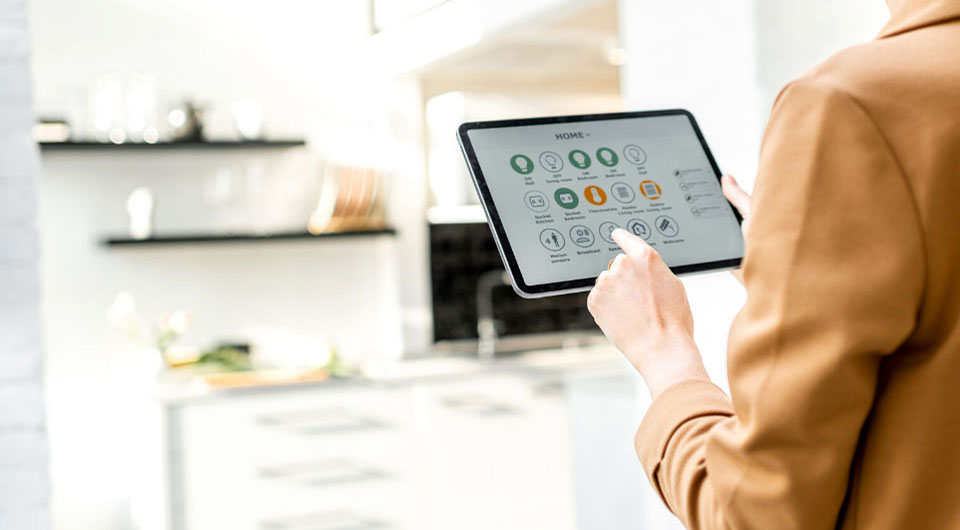
The concept of the “smart home” is no longer synonymous with luxury.
Today, automation systems are essential tools for reducing energy consumption while enhancing security and comfort - key factors that define the quality of a modern residence.
According to the International Energy Agency, smart buildings can reduce household energy consumption by up to 30% through automated lighting, heating, and cooling systems. At the same time, Statista (2025) projects that the global smart home market will exceed $190 billion by 2025, with more than 670 million households worldwide using smart devices on a daily basis.
When Technology Supports Sustainability
The shift toward smart homes is not just about convenience — it is about sustainability.
By combining intelligent automation with renewable energy sources such as solar panels, heat pumps, and energy storage systems, a building can achieve up to 70% energy autonomy, according to the European Building Performance Institute (2023).
In Greece, the Ministry of Environment, through the “Smart Buildings 2030” initiative, aims to upgrade 250,000 residences over the next five years, placing emphasis on automation technologies, energy monitoring sensors, and A+ energy certification.
The Future of Housing in Rhodes and Greece
Smart residences are expected to shape the property market in the years ahead.
Eurostat data shows that households implementing basic automation systems reduce electricity bills by an average of 18%.
In regions with strong sun exposure, such as Rhodes, smart shading systems and automated climate control can improve energy performance by up to 25%.
As Vasilis Diakogeorgiou notes:
“A smart home is not a passing trend; it is the natural evolution of thoughtful construction. When technology is integrated with proper design and sustainability principles, comfort gains real meaning.”
The success of a smart home starts at the planning stage.
Proper wiring, energy infrastructure, and the selection of certified systems determine whether a residence is truly intelligent — or simply equipped with gadgets.
In contemporary architecture, technology is embedded within the structure of the home, not added afterward.
Technology becomes truly “smart” when it serves sustainability, efficiency, and human well-being.
Smart homes represent the next step in a new housing philosophy — where energy performance, comfort, and security coexist, with both people and the environment at the center.